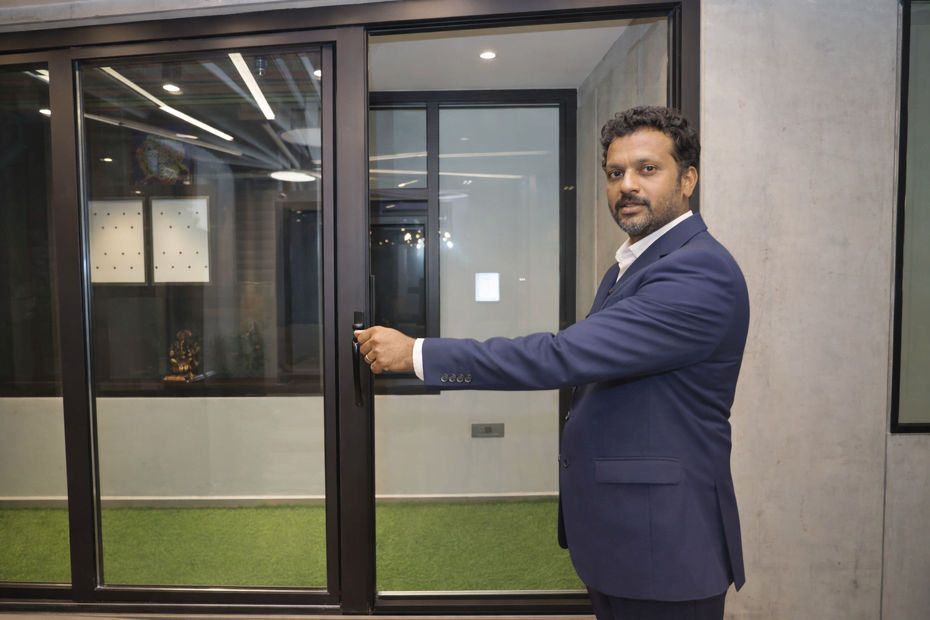
Urban interiors are shifting toward adaptability. Static walls limit usability, while movable systems allow spaces to evolve through the day. Conference rooms become collaborative zones, living spaces transform into private areas, and open layouts remain visually connected.
This is where aluminium sliding partitions enable dynamic zoning without heavy structural changes. They support flexibility while maintaining a clean architectural flow.
Not every space requires permanent division. Modern movable systems are most effective in:
In such environments, aluminium sliding partitions provide controlled division while preserving openness and visual continuity.
Aluminium Windows for Villas in Hyderabad: What Works at Scale
Premium Aluminium Windows in Hyderabad for Luxury Homes
Movement quality defines user experience. Poor systems drag, misalign, or create noise over time. High-performance systems focus on:
Well-engineered aluminium sliding partitions ensure motion remains smooth, silent, and controlled even after years of operation.
Modern architecture values continuity. Visible mechanical elements disrupt aesthetics. Advanced partition systems focus on:
When integrated correctly, aluminium sliding partitions appear as part of the architecture rather than an added element.
Architects and builders assess long-term performance before selecting systems:
Structural Stability – Prevents bending, shaking, or misalignment.
Sealing Quality – Controls sound, air, and dust transfer.
Load Handling – Supports wide and tall panels safely.
Durability – Maintains smooth motion after years of use.
Installation Precision – Ensures proper alignment and balance.
Professionals rely on real-world testing to judge how sliding partition doors perform under continuous use.
Aluminium Windows Showroom in Hyderabad: What to See Before You Decide
Aluminium Sliding Windows in Hyderabad: Choosing the Right System, Not Just the Size
Architecture today values flexibility as much as form. Spaces must respond to changing needs without compromising aesthetics or usability. Intelligent movement systems allow environments to remain open, private, and adaptable when required.
The success of adaptive interiors depends not on separation, but on how smoothly and naturally that separation works.