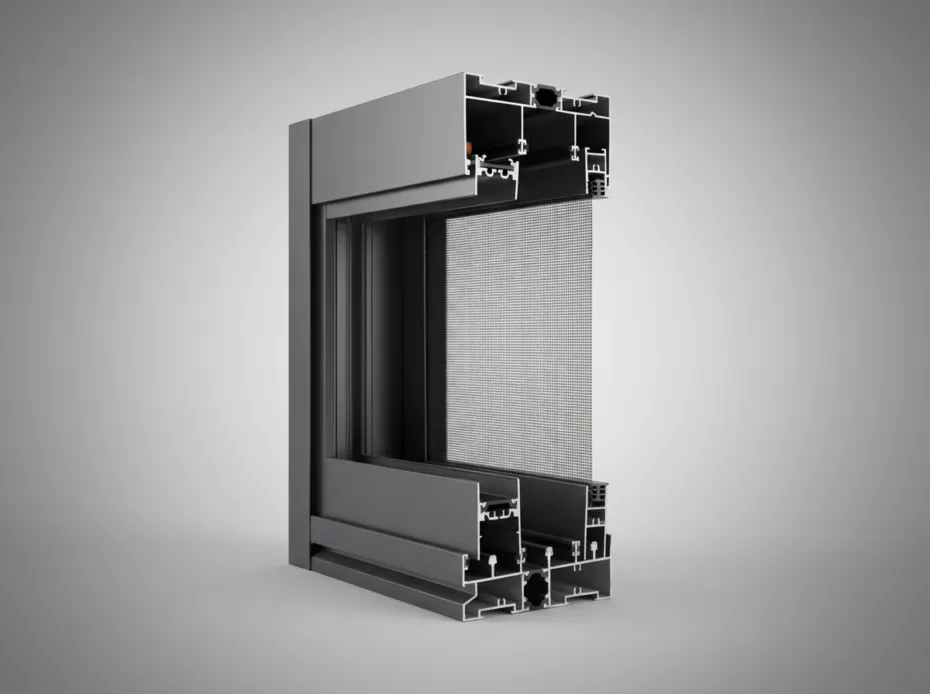
Key Takeaways
- Casement windows offer superior sealing and ventilation control
- Aluminium frames ensure long-term alignment and durability
- Ideal for bedrooms, kitchens, studies, and cross-ventilated layouts
- Performance depends more on system engineering than appearance
Table of Contents
- What Defines an Aluminium Casement Window System
- Why Casement Windows Still Matter in Modern Homes
- Aluminium vs uPVC Casement Windows
- Where Casement Windows Perform Best
- Design & Hardware Considerations
- Installation Quality: The Hidden Factor
- Experience Live Casement Window Testing at HUXO
- FAQs
- Final Wrap-Up
What Defines an Aluminium Casement Window System
A casement window operates on side-mounted hinges and opens inward or outward using friction stays or hinges. Unlike sliders, casement systems rely on compression sealing, making the engineering of frames, gaskets, and locking points critical.
In aluminium casement windows in Hyderabad, performance is dictated by:
- Profile wall thickness
- Corner joint accuracy
- Locking hardware alignment
- Seal continuity
Why Casement Windows Still Matter in Modern Homes
Despite the rise of large sliders, casement windows remain essential for spaces that demand:
- Controlled ventilation without dust ingress
- Secure night ventilation
- Noise reduction from traffic or dense neighborhoods
Casement systems create a tighter seal than sliding windows, making them practical in bedrooms, kitchens, and study areas where comfort consistency matters.
Aluminium vs uPVC Casement Windows
While uPVC casement windows are common, aluminium casement windows in Hyderabad are preferred for projects requiring:
- Slimmer sightlines
- Higher structural rigidity
- Better performance under prolonged sun exposure
Aluminium frames maintain shape over time, ensuring the window closes and seals exactly as intended years after installation.
Where Casement Windows Perform Best
Casement windows are not universal solutions. They work best in:
- Independent houses with cross-ventilation planning
- Apartments facing internal courtyards
- Kitchens and utility areas requiring controlled airflow
- Upper floors where wind pressure is higher
Their ability to direct airflow makes them functionally different from sliders, not inferior or superior.
Design & Hardware Considerations
Well-designed aluminium casement windows use:
- Multi-point locking systems
- Continuous EPDM gaskets
- Adjustable friction stays
- Reinforced sash profiles
Poor hardware selection is the most common reason casement windows fail prematurely, not the aluminium itself.
Installation Quality: The Hidden Factor
Even the best aluminium casement window system can underperform if:
- Frames are not squared correctly
- Shims are uneven
- Drainage paths are blocked
Precision installation ensures sealing, smooth operation, and longevity, especially in Hyderabad’s heat and dust conditions.
Experience Live Casement Window Testing at HUXO
At the HUXO Experience Center in Hyderabad, casement windows are demonstrated under:
- Air pressure simulations
- Water penetration tests
- Hardware stress cycles
This allows architects and homeowners to see how aluminium casement windows behave under real operating conditions before specification.
FAQs
- Are aluminium casement windows suitable for high-rise buildings?
Yes, when designed with appropriate hardware and wind-load-rated profiles. - Do casement windows provide better noise insulation?
Compression sealing offers improved acoustic performance compared to sliding systems. - Can casement windows be combined with fixed glass panels?
Yes, fixed and operable panels are often paired for balanced daylight and ventilation. - Are aluminium casement windows easy to maintain?
They require minimal maintenance beyond periodic hardware checks and gasket cleaning.
Final Wrap-Up
Aluminium casement windows in Hyderabad are not a design trend, they are a performance choice. When specified correctly, they deliver controlled airflow, reliable sealing, and long-term operational stability that complements modern residential planning.